
Bihar STET Online Form 2026 – Apply Online, Eligibility, Exam Pattern & Notification
1. Introduction to Bihar STET 2026
The Bihar State Eligibility Test (STET) 2026 has officially been announced, bringing a wave of excitement and anticipation among teaching aspirants across the state and beyond. Conducted by the Bihar School Examination Board (BSEB), this state-level eligibility examination serves as the crucial gateway for candidates aspiring to become secondary (Class 9-10) and senior secondary (Class 11-12) teachers in government and government-aided schools across Bihar. As the education sector undergoes significant reforms, the demand for qualified and dedicated teachers has seen a steep rise. The Bihar STET 2026 aims to identify and shortlist meritorious candidates who possess the requisite academic qualifications and pedagogical skills to nurture the next generation of students. This comprehensive article delves deep into every aspect of the Bihar STET 2026 notification, providing an exhaustive guide covering eligibility criteria, important dates, fee structure, detailed syllabus analysis, job profile, salary breakdown, and strategic preparation tips to help you ace this highly competitive examination.2. Important Dates and Timeline
Staying updated with the official timeline is paramount for a smooth application process. The BSEB has outlined a clear schedule for the Bihar STET 2026 examination. Candidates are strongly advised to adhere to these deadlines strictly, as no extensions are typically granted.- Application Start Date: 17 August 2026
- Application Last Date: 22 September 2026
- Fee Payment Last Date: 22 September 2026
- Admit Card Release Date: To be announced (typically 2 weeks prior to the exam)
- Examination Date: To be announced
- Answer Key Release Date: To be announced post-examination
- Final Result Declaration: To be announced
3. Detailed Application Process and Steps
Applying for the Bihar STET 2026 requires careful attention to detail. The entire process is conducted online through the official BSEB STET portal.- Registration: Candidates must first register on the official website by providing their basic details, including name, email address, and active mobile number. Upon successful registration, a unique application number and password will be generated.
- Filling the Form: Log in using the credentials and fill out the detailed application form. This includes personal information, educational qualifications, choice of exam center, and paper selection (Paper I, Paper II, or both).
- Document Upload: Upload scanned copies of a recent passport-size photograph, signature, and necessary educational and category certificates in the prescribed format and size.
- Fee Payment: Proceed to the payment gateway to remit the required application fee based on your category and paper selection.
- Final Submission: Review the entire application form thoroughly before final submission. Download and print the confirmation page for future reference.
4. Comprehensive Eligibility Criteria
The eligibility criteria are the foundational requirements that every applicant must fulfill. The Bihar STET 2026 has distinct criteria for Paper I and Paper II.- Paper I (Secondary Level, Class 9-10): Candidates must possess a Bachelor's Degree in the relevant subject from a recognized university with at least 50% marks. Additionally, a Bachelor of Education (B.Ed.) degree is mandatory. Specific subject combinations (e.g., Math with Physics/Chemistry, Science with Zoology/Botany/Chemistry) are required depending on the chosen teaching subject.
- Paper II (Senior Secondary Level, Class 11-12): Candidates must hold a Post Graduate (PG) Degree in the relevant subject from a recognized university with a minimum 2nd division or equivalent grade. Along with the PG degree, a Bachelor of Education (B.Ed.) is also a strict requirement.
5. Age Limit and Relaxations Explained
The age criteria are crucial for determining eligibility. The cutoff date for age calculation is set as 01 August 2026.- Minimum Age: 21 Years for all categories.
- Maximum Age (Male UR): 37 Years
- Maximum Age (Female UR, BC, EBC): 40 Years
- Maximum Age (SC/ST Candidates): 42 Years
6. Application Fee Structure in Detail
The application fee varies based on the candidate's category and the number of papers they are applying for. The fee is non-refundable and must be paid online via debit card, credit card, or net banking.- Single Paper (Paper I or Paper II):
- Both Papers (Paper I and Paper II):
7. Vacancy Details and Subject-wise Breakdown
While the exact number of vacancies is subject to the official detailed notification, historical trends suggest that thousands of positions will be open across various subjects. For Paper I, subjects typically include Hindi, Urdu, Sanskrit, English, Mathematics, Science, and Social Science. For Paper II, the subjects range across English, Mathematics, Physics, Chemistry, Zoology, Botany, Computer Science, Maithili, and Commerce. Candidates must carefully select their subject based on their graduation/post-graduation specialization.8. Paper I Syllabus and Exam Pattern (Class 9-10)
Paper I is designed for candidates aiming to teach secondary classes. The exam consists of 150 multiple-choice questions (MCQs), carrying one mark each, with a total duration of 2 hours and 30 minutes. The paper is divided into two parts:- Part A: Specified Subject (100 Marks) - This section deeply tests the candidate's knowledge in their chosen subject (e.g., Science, Mathematics, Social Science). The difficulty level is typically aligned with the graduation curriculum.
- Part B: Art of Teaching and Other Skills (50 Marks) - This section encompasses teaching methodology (30 marks) and general knowledge, environmental science, mathematical aptitude, and logical reasoning (20 marks).
9. Paper II Syllabus and Exam Pattern (Class 11-12)
Similar in structure to Paper I, Paper II targets senior secondary teachers. It also comprises 150 MCQs to be solved in 2 hours and 30 minutes.- Part A: Specified Subject (100 Marks) - This section evaluates advanced knowledge in the chosen postgraduate subject (e.g., Physics, History, Computer Science). The difficulty level is significantly higher, aligning with the postgraduate curriculum.
- Part B: Art of Teaching and Other Skills (50 Marks) - Identical to Paper I, this section tests pedagogical skills and general aptitude, crucial for effective teaching at higher secondary levels.
10. Detailed Selection Process (CBT Exam)
The selection process for Bihar STET 2026 is streamlined and transparent, primarily based on the candidate's performance in the Computer Based Test (CBT). Unlike previous years where OMR sheets were used, the shift to a CBT mode ensures faster processing and reduced human error. The examination does not have any negative marking, which encourages candidates to attempt all questions. To qualify, General category candidates must score at least 50%, while relaxations in qualifying marks are provided for BC (45.5%), EBC (42.5%), SC/ST/PWD/Women (40%).11. Detailed Job Profile and Responsibilities (Day-to-day work)
The role of a teacher in Bihar's state schools extends far beyond the traditional classroom setting. The day-to-day responsibilities include:- Curriculum Delivery: Planning, preparing, and delivering highly engaging lessons aligned with the BSEB syllabus.
- Student Assessment: Designing and conducting regular tests, quizzes, and term examinations to evaluate student progress continuously.
- Mentorship and Guidance: Acting as a mentor to students, guiding them not just academically but also in their personal development and career choices.
- Administrative Duties: Maintaining attendance records, preparing report cards, and participating in staff meetings and school events.
- Extracurricular Involvement: Organizing and encouraging student participation in sports, debates, science exhibitions, and cultural activities to ensure holistic development.
- Continuous Learning: Attending workshops and training programs to stay updated with modern pedagogical techniques and educational technologies.
12. Comprehensive Salary Breakdown and Allowances (DA, HRA, TA)
A career as a government teacher in Bihar offers financial stability, attractive remuneration, and comprehensive benefits. The salary structure is governed by the state government's pay commission rules.- Basic Pay: A substantial starting basic pay forms the core of the salary structure. For secondary and senior secondary teachers, the basic pay is highly competitive.
- Dearness Allowance (DA): Calculated as a percentage of the basic pay, DA is periodically revised to offset the impact of inflation, ensuring the real value of the salary is maintained.
- House Rent Allowance (HRA): Depending on the posting location (urban vs. rural), teachers receive a percentage of their basic pay as HRA to cover accommodation costs.
- Transport Allowance (TA): A fixed allowance provided to cover commuting expenses between the residence and the school.
- Medical Allowance: A fixed monthly sum provided to support minor medical expenses for the teacher and dependent family members.
- Pension and Gratuity: Post-retirement benefits, including a pension scheme and gratuity, provide long-term financial security.
13. Career Growth and Promotions Hierarchy
The career trajectory for a teacher selected through Bihar STET is structured and offers excellent avenues for professional advancement.- Entry Level: Assistant Teacher in Secondary or Senior Secondary School.
- First Promotion: With adequate years of service and satisfactory performance, teachers can be promoted to Senior Teacher or Head of Department for specific subjects.
- Mid-Career: Exceptional teachers with administrative acumen can aspire to become Vice-Principal and eventually Principal of a high school.
- Administrative Roles: Experienced educators can also transition into administrative roles within the state education department, such as Block Education Officer (BEO) or District Education Officer (DEO), influencing educational policies at a broader level.
14. In-depth Syllabus Analysis (Subject by subject breakdown)
A profound understanding of the syllabus is the bedrock of successful preparation. Let's delve into a generic breakdown:- Science (Paper I): Covers detailed concepts of Physics, Chemistry, and Biology up to the graduation level. Key topics include mechanics, thermodynamics, atomic structure, chemical bonding, cell biology, and genetics.
- Mathematics (Paper I & II): Encompasses Algebra, Calculus, Trigonometry, Coordinate Geometry, and Statistics. For Paper II, advanced topics like Real Analysis, Abstract Algebra, and Topology are included.
- Social Science (Paper I): A comprehensive blend of History (Indian and World), Geography (Physical and Human), Political Science (Indian Constitution, Governance), and Economics (Micro and Macro concepts).
- Languages (Hindi, English, etc.): Focuses on literature history, renowned authors and their works, grammar, comprehension, and phonetic analysis.
- Art of Teaching: Core topics include child development theories, principles of teaching-learning, inclusive education, educational evaluation, and the integration of ICT in education.
15. Preparation Strategy and Recommended Books
Cracking the Bihar STET requires a methodical and disciplined approach.- Understand the Syllabus: Begin by thoroughly dissecting the official syllabus. Identify your strong and weak areas.
- Create a Study Plan: Develop a realistic and structured timetable that allocates sufficient time for subject mastery, pedagogy, and revision.
- Focus on Fundamentals: Clear your basic concepts using standard textbooks before moving to advanced reference materials.
- Mock Tests and Previous Papers: Regularly practice full-length mock tests to build stamina and improve time management. Analyze your performance to identify areas of improvement. Solving previous years' question papers is indispensable for understanding the exam pattern and question difficulty.
- Revision: Consistent revision is key to retaining vast amounts of information. Create concise notes for quick reference during the final weeks before the exam.
16. Recommended Books and Study Material
Choosing the right study material can significantly impact your preparation.- Subject Specific: NCERT books for Classes 9 to 12 are fundamental. For graduation and PG level depth, refer to standard university textbooks (e.g., H.C. Verma for Physics, R.S. Aggarwal for Mathematics).
- Art of Teaching: Books by prominent authors on child development and pedagogy (e.g., J.C. Aggarwal, Sandeep Kumar) are highly recommended.
- General Knowledge: Standard yearbooks (like Manorama) and monthly current affairs magazines (like Pratiyogita Darpan).
- Practice Sets: Utilize reputed publication practice workbooks designed specifically for state TET/STET exams.
17. Previous Year Cut-off Trends and Exam Difficulty
Analyzing historical cut-off trends provides a realistic target for aspirants. While the qualifying marks are fixed, the actual difficulty of the paper determines how many candidates clear the exam. Historically, the exam has varied from moderate to difficult. The subject-specific section (100 marks) is usually challenging, demanding deep conceptual clarity, whereas the pedagogy section (50 marks) is scoring if prepared well. Candidates should aim to score at least 10-15% above the minimum qualifying percentage to ensure a safe margin, considering the increasing level of competition each year.18. Exam Day Guidelines and Instructions
On the day of the examination, maintaining composure is vital. Candidates must reach the exam center well ahead of the reporting time mentioned on the admit card. Carrying a printed copy of the valid admit card along with an original, government-issued photo ID (like Aadhar Card, PAN Card, or Voter ID) is mandatory. Electronic gadgets, calculators, smartwatches, and study materials are strictly prohibited inside the examination hall. Familiarize yourself with the CBT interface during the initial instruction phase. Read questions carefully and manage your time effectively, ensuring you do not spend too much time on any single challenging question.19. Admit Card Download and Discrepancy Resolution
The admit card is a crucial document that serves as the entry pass for the examination. It will be made available for download on the official BSEB website approximately two weeks prior to the exam date. Candidates must log in using their application number and password to access their admit card. Upon downloading, thoroughly verify all details, including name, photograph, signature, chosen subject, and exam center address. In case of any discrepancies or errors, candidates must immediately contact the BSEB helpline or support desk to initiate corrections before the exam date to avoid any last-minute hassle or denial of entry.20. Answer Key and Objection Management
Shortly after the successful completion of the CBT exam, the BSEB will release the provisional answer key on its official portal. Candidates are encouraged to download their response sheets along with the official answer key to estimate their scores. If a candidate finds any discrepancy or incorrect answer provided in the provisional key, they can raise an objection within a specified window. A nominal fee may be charged per question challenged. The objections will be reviewed by a panel of subject matter experts, and a final, binding answer key will be published subsequently.21. Result Declaration and Certificate Validity
The final result of the Bihar STET 2026 will be processed based on the final answer key and the candidate's performance in the CBT. The results will be declared in the form of a scorecard on the official website. Candidates who secure marks equal to or above the qualifying threshold for their respective category will be declared qualified. A significant and positive reform in recent years is the lifetime validity of the STET qualifying certificate. Once a candidate qualifies for the STET, the certificate remains valid indefinitely, allowing them to apply for relevant teacher recruitment drives in Bihar whenever vacancies are announced, without the need to retake the eligibility test.22. Conclusion and Final Tips for Aspirants
The Bihar STET 2026 is a golden opportunity for those passionate about shaping the future through education. The journey from application to selection demands dedication, strategic planning, and immense hard work. By thoroughly understanding the syllabus, strictly following a structured study plan, and maintaining consistent practice, candidates can confidently navigate this competitive exam. Remember to stay updated with official announcements on the BSEB website, prioritize your physical and mental well-being during the preparation phase, and approach the exam with a positive and focused mindset. Success in the Bihar STET is not just about securing a job; it is about embarking on a noble and fulfilling career in teaching. Best of luck to all aspiring candidates!Prepare & Test Your Speed on TypeHindi
Practice full 10-minute exam simulations for SSC CHSL, High Courts, and state clerical exams with real WPM & accuracy scoring.
Mandated by SSC for Hindi typing tests. Practice with official Unicode InScript layout and realistic passages.
Step-by-step interactive lessons for beginners. Master finger positions on home row, top row, and bottom row.
Interactive visual map of all vowels, consonants, halants, and special conjunct characters in Devanagari script.
Build muscle memory and reflex speed while destroying falling words in Hindi and English.
Interactive steno stroke teacher, vector animated demonstrations, word builder, and 40–120 WPM audio dictations.
Related Articles & Typing Guides
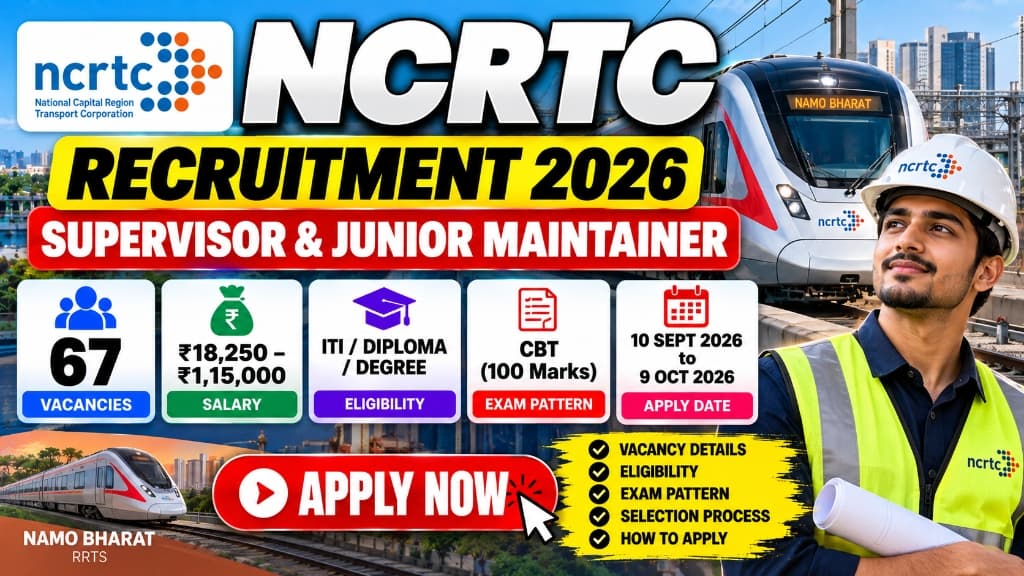
NCRTC Recruitment 2026: 67 Vacancies for Supervisor and Junior Maintainer Posts, Eligibility, Salary, Exam Pattern and How to Apply
The National Capital Region Transport Corporation (NCRTC) has released Vacancy Notice No. 32/2026 for the direct recruitment of Operations & Maintenance staff for the Namo Bharat/RRTS system.

NIT Goa Faculty Recruitment 2026: 28 Posts, Eligibility, Salary, Vacancy, Selection Process and How to Apply
The National Institute of Technology Goa (NIT Goa) has released a notification for the recruitment of faculty members for various departments.
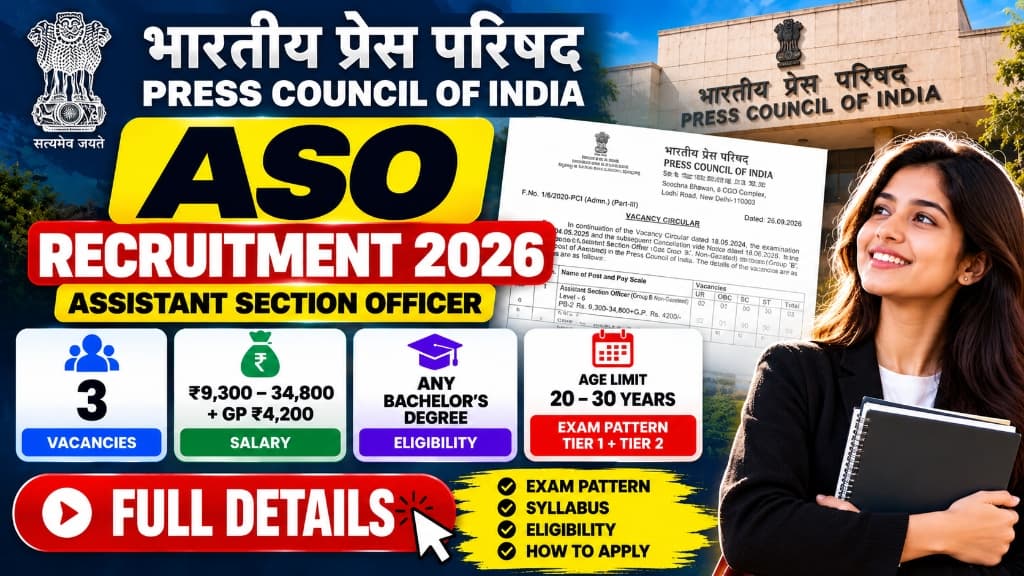
Press Council of India ASO Recruitment 2026: 3 Vacancies, Eligibility, Salary, Exam Pattern, Syllabus and How to Apply
The Press Council of India (PCI) has released a fresh Vacancy Circular 2026 for recruitment to the post of Assistant Section Officer (ASO).
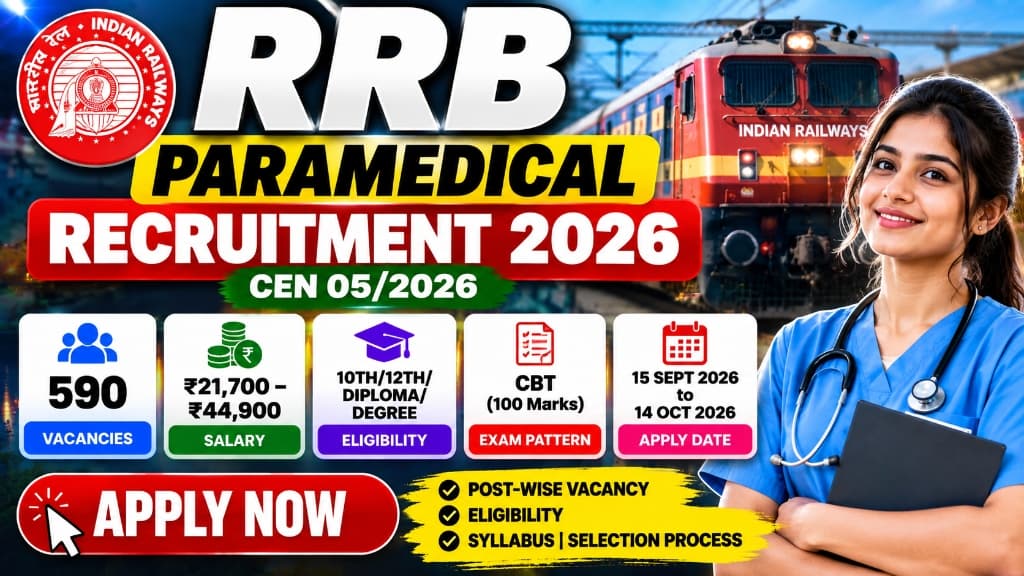
RRB Paramedical Recruitment 2026: 590 Vacancies, Eligibility, Salary, Exam Pattern, Selection Process and How to Apply
The Railway Recruitment Boards (RRBs) have released the RRB Paramedical Recruitment 2026 notification for 590 vacancies. Apply online till 14 October 2026.