
यूपीईएसएससी पीआरटी असिस्टेंट टीचर भर्ती 2026 – 12,405 पदों पर अधिसूचना, योग्यता व ऑनलाइन आवेदन
The Uttar Pradesh Education Service Selection Commission (UPESSC) has officially announced one of the most anticipated recruitment drives of the decade for the position of Assistant Teacher (Primary Teacher PRT). This landmark recruitment for the year 2026 brings an extraordinary opportunity for aspiring educators, aiming to fill an awe-inspiring 12,405 vacancies across various primary education institutions in the state of Uttar Pradesh. With a comprehensive and transparent selection process, coupled with substantial career benefits and job security, this recruitment cycle is poised to attract hundreds of thousands of applicants seeking a prestigious career in the public education sector.
This exhaustive, multi-faceted guide provides an in-depth exploration of every single aspect of the UPESSC PRT Assistant Teacher Recruitment 2026. From the fundamental eligibility criteria and the meticulous application process to a hyper-detailed syllabus breakdown, granular salary structure analysis, career progression trajectories, and proven preparation strategies formulated by experts, we cover everything you need to know to navigate this highly competitive examination successfully.
1. Overview of UPESSC PRT Recruitment 2026
The UPESSC was established with the vision of streamlining the recruitment of educators across various tiers of the educational hierarchy in Uttar Pradesh. The 2026 recruitment notification for Assistant Teachers stands as a testament to the government's commitment to fortifying the foundational education infrastructure. The primary focus of this drive is to onboard highly qualified, pedagogically sound, and passionately dedicated individuals who can shape the young minds of the state.
The recruitment encompasses two main sub-posts under the PRT umbrella: Assistant Teacher (Primary – Urban) and Assistant Teacher (Attached Primary). While both share the core objective of imparting primary education, they cater to slightly different administrative frameworks and school environments, offering candidates varied avenues of professional engagement.
2. Important Dates & Crucial Timelines
Staying abreast of the official schedule is paramount for any serious aspirant. The UPESSC has laid out a strict timeline for the 2026 recruitment cycle. Candidates must mark their calendars and ensure that all administrative requirements are fulfilled well within the stipulated deadlines to avoid last-minute technical glitches or disqualification.
- Official Notification Release: First Week of September 2026
- Application Start Date: 16 September 2026
- Application End Date: 15 October 2026
- Last Date for Fee Payment: 15 October 2026
- Form Correction Window: 20 October 2026 to 25 October 2026
- Admit Card Release Date: Last Week of November 2026
- Written Examination Dates: 03 December 2026 to 04 December 2026
- Answer Key Release: Mid-December 2026
- Final Result Declaration: Expected in February 2027
3. Vacancy Details & Structural Breakdown
The sheer magnitude of the vacancy count—12,405 posts—makes this one of the most substantial recruitment drives in recent history. The vacancies are distributed across the state, taking into account the demographic needs and the existing teacher-to-student ratios in various districts.
- Total Vacancies: 12,405 Posts
- Post Category: Assistant Teacher (Primary Teacher PRT)
- Sub-posts Included:
While the exact category-wise breakdown (General, OBC, SC, ST, EWS) will be detailed in the official government gazette, historically, the distribution strictly adheres to the reservation norms mandated by the Government of Uttar Pradesh, ensuring equitable opportunities across all socio-economic strata.
4. Application Fee and Payment Modalities
The application fee is tiered to provide financial relief to candidates from reserved categories and specially-abled individuals. The payment must be made online through integrated payment gateways (Net Banking, Debit Card, Credit Card, UPI).
- General / OBC / EWS Categories: INR 1000
- Scheduled Caste (SC) / Scheduled Tribe (ST): INR 500
- Physically Handicapped (PH) / Divyangjan: INR 300
5. Age Limit & Relaxations (As on 01 July 2026)
Age criteria form a critical component of the eligibility matrix. The UPESSC has defined specific age brackets for the different sub-posts to ensure a dynamic yet experienced workforce.
- Assistant Teacher (Primary – Urban): 21 to 40 years.
- Assistant Teacher (Attached Primary): 21 to 62 years.
6. Educational Qualifications & Eligibility Criteria
The UPESSC sets a high bar for educational qualifications to ensure the quality of pedagogy. Candidates must possess a robust academic foundation coupled with specialized teacher training and mandatory certifications. To be eligible, an applicant must fulfill the following trinity of requirements:
- Graduation Degree: A bachelor's degree in any discipline (Arts, Science, Commerce) from a recognized university or institution established by law in India.
- Teacher-Training Qualification: A professional diploma or degree in elementary education or specialized teacher training. Accepted qualifications typically include:
- TET Qualification: Candidates must have successfully cleared the Teacher Eligibility Test (TET). Either the State-level UP TET (Uttar Pradesh Teacher Eligibility Test) or the Central-level CTET (Central Teacher Eligibility Test) is acceptable.
7. Detailed Job Profile & Core Responsibilities
The role of an Assistant Teacher in the UP primary education system transcends mere academic instruction. It is a multidimensional role that requires pedagogical expertise, psychological understanding, and community engagement.
- Instructional Delivery: Planning, preparing, and delivering engaging lessons across core subjects like Hindi, Mathematics, Environmental Studies, and English as per the state syllabus.
- Formative and Summative Assessment: Designing tests, grading assignments, and continuously evaluating student progress to identify learning gaps and formulate remedial strategies.
- Holistic Development: Fostering not just academic growth but also moral, social, and emotional development through extracurricular activities, sports, and cultural events.
- Inclusive Education: Catering to the diverse learning needs of students in the classroom, including those with learning disabilities or from disadvantaged backgrounds.
8. Day-to-Day Operations and Classroom Management
A typical day in the life of a UPESSC Assistant Teacher is highly structured yet dynamic.
- Morning Assembly: Participating in and occasionally organizing the morning assembly, establishing a positive tone for the day.
- Lesson Execution: Conducting back-to-back classes, utilizing teaching aids, digital boards (where available), and interactive methodologies to keep young learners engaged.
- Administrative Tasks: Maintaining meticulous attendance records, updating the Mid-Day Meal (MDM) registers, and managing student portfolios.
- Parent-Teacher Interactions: Conducting regular meetings with parents and guardians to discuss student progress, behavioral issues, and collaborative strategies for improvement.
9. Comprehensive Salary Breakdown & Allowances
One of the most attractive aspects of the UPESSC Assistant Teacher post is the highly competitive compensation package. The salary structure is aligned with the latest Pay Commission recommendations, offering substantial financial security.
- Basic Pay: Starting basic pay generally falls in the range of INR 35,400 per month (Level 6 in the Pay Matrix).
- Dearness Allowance (DA): Calculated as a percentage of the basic pay, revised bi-annually to offset inflation. Currently, it ranges between 46% to 50% depending on the latest government orders.
- House Rent Allowance (HRA): Varies depending on the posting location (Urban, Semi-urban, Rural), usually ranging from 8% to 27% of the basic pay.
- Transport Allowance (TA): A fixed monthly allowance to cover commuting expenses.
10. Perks, Benefits, and Deductions
Beyond the gross salary, Assistant Teachers enjoy several ancillary benefits that enhance the overall value of the job profile.
- Medical Facilities: Comprehensive health coverage for the employee and dependent family members under state health schemes.
- Pension Scheme: Inclusion in the National Pension System (NPS), where the government makes a matching or higher contribution towards the employee's retirement corpus.
- Leave Entitlements: Generous leave policies including Casual Leaves (CL), Earned Leaves (EL), Medical Leaves, and extensive summer and winter vacations.
- Deductions: Standard deductions include NPS contributions, state insurance premiums, and professional tax, leading to a substantial yet comfortable net in-hand salary.
11. Career Growth & Promotions Hierarchy
A career as an Assistant Teacher is not stagnant. The Uttar Pradesh primary education department offers a well-defined hierarchical progression path for individuals demonstrating merit, experience, and commitment.
- Assistant Teacher (Primary): The entry-level position.
- Headmaster / Headmistress (Primary School): After a minimum stipulated years of service (usually 5 to 8 years) and subject to seniority and departmental exams.
- Assistant Teacher (Upper Primary): Promotion to teach classes 6 to 8.
- Headmaster (Upper Primary School): The administrative head of an upper primary institution.
- Block Education Officer (BEO): Through departmental examinations or direct recruitment via UPPSC, overseeing educational administration at the block level.
- Basic Shiksha Adhikari (BSA): A highly prestigious administrative role at the district level.
12. Selection Process Unveiled
The UPESSC has instituted a rigorous, multi-tiered selection process to ensure only the most capable candidates are inducted. The 2026 recruitment specifically features three distinct phases:
- Written Examination: An objective-type, OMR-based or Computer-Based Test (CBT) evaluating the candidate's core competencies.
- Interview (Viva-Voce): A personal interview panel designed to assess the candidate's communication skills, pedagogical philosophy, presence of mind, and suitability for the teaching profession.
- Document Verification: A stringent background check to validate all educational certificates, caste certificates, domicile, and identity proofs.
13. Exam Pattern & Scheme of Written Test
Understanding the structural anatomy of the written exam is the first step towards a targeted preparation strategy. The exam is designed to be exhaustive, testing both depth and breadth of knowledge.
- Mode of Exam: Offline (OMR based) or Online (CBT) - to be confirmed in the detailed notification.
- Question Type: Multiple Choice Questions (MCQs).
- Total Questions: Typically 150 questions.
- Total Marks: 150 marks (1 mark per question).
- Duration: 2 hours and 30 minutes (150 minutes).
- Negative Marking: It is crucial to verify the official notification regarding negative marking; traditionally, PRT exams in UP have had no negative marking, but this can change.
14. In-depth Syllabus Analysis: Section by Section
The syllabus for the UPESSC PRT exam is notoriously vast, encompassing an array of subjects. A granular understanding of the syllabus is essential.
- Language Proficiency (Hindi, English, Sanskrit): Grammar, reading comprehension, vocabulary, unseen passages, figures of speech, idioms, and phrases.
- Child Development and Pedagogy (CDP): Theories of learning, child psychology, inclusive education, teaching-learning processes, and educational evaluation.
- Mathematics: Number systems, algebra, geometry, arithmetic (profit & loss, simple/compound interest, percentages), statistics, and basic trigonometry.
- Science & Environment: Laws of physics, chemical properties, human biology, plant physiology, environmental conservation, ecology, and natural resources.
- General Knowledge & Current Affairs: Indian history, geography, polity, economy, recent international and national events, awards, sports, and Uttar Pradesh specific GK.
15. Child Development and Pedagogy (CDP) Strategy
CDP is the backbone of any teaching examination. It requires a theoretical understanding combined with practical application.
- Focus Areas: Deep dive into the theories of Piaget, Vygotsky, Kohlberg, and Gardner. Understand the nuances of formative assessment versus summative assessment.
- Preparation Tip: Do not just memorize theories; try to apply them to hypothetical classroom scenarios. Solve case-study-based questions to build analytical skills.
- Resource: Standard B.Ed/D.El.Ed textbooks and dedicated competitive exam guides for CDP.
16. Language Sections Strategy (Hindi, English, Sanskrit)
Languages often serve as scoring sections if prepared systematically.
- Grammar is Key: Ensure absolute clarity on grammatical rules—tenses, parts of speech, active/passive voice, and direct/indirect speech in English; Sandhi, Samas, Ras, Chhand, Alankar in Hindi and Sanskrit.
- Vocabulary Building: Cultivate a daily habit of reading newspapers or literary texts to naturally enhance vocabulary and comprehension speed.
- Practice: Solve at least two reading comprehensions daily to improve reading speed and accuracy under time pressure.
17. Mathematics and Science Strategy
For candidates from non-science backgrounds, this section can be intimidating, but foundational clarity can turn it into a strength.
- NCERT is the Bible: Rely heavily on NCERT textbooks from classes 6 to 10 for both Science and Mathematics. They provide the exact level of depth required for the exam.
- Formula Sheets: Create dedicated formula sheets for Mathematics (mensuration, algebra) and Science (physics formulas, chemical equations) and revise them daily.
- Time Management: Practice solving mathematical problems with speed. Learn short-cut tricks for arithmetic calculations to save precious time during the exam.
18. General Knowledge & Current Affairs Strategy
The GK section is vast and unpredictable, necessitating a continuous and structured approach.
- Daily Updates: Dedicate 45 minutes daily to reading a reliable national newspaper (like The Hindu or Indian Express) and a vernacular daily for state-specific news.
- Monthly Compilations: Utilize monthly current affairs magazines (like Pratiyogita Darpan or online PDFs) to consolidate your monthly learning.
- Static GK: For history, geography, and polity, Lucent's General Knowledge remains an unparalleled resource for quick revision.
19. Preparation Strategy & Recommended Books
A haphazard approach leads to failure. Success demands a microscopic, day-by-day plan.
- Phase 1 (Months 1-3): Focus purely on concept building and syllabus coverage. Read standard textbooks and make concise, handwritten notes.
- Phase 2 (Months 4-5): Shift focus to sectional tests and revision. Identify weak areas and dedicate extra hours to them.
- Phase 3 (Month 6): The final month should be exclusively for full-length mock tests, time management practice, and aggressive revision of notes and formula sheets.
- CDP: Sandeep Kumar or standard D.El.Ed texts.
- Hindi: Lucent's Samanya Hindi or Aditya Publication.
- Math/Science: NCERT Books (Class 6-10), R.S. Aggarwal (Quantitative Aptitude).
- General Studies: Lucent's GK, Ghatna Chakra (for UP specific).
20. Previous Year Cut-off Trends & Exam Difficulty
Analyzing past data provides a realistic benchmark. Historically, UP teacher recruitment exams are moderately difficult, with high competition driving cut-offs upwards.
While the 2026 cut-off will depend on the paper's difficulty and the specific number of applicants, candidates should aim for a safe score of at least 110+ out of 150 to ensure a strong position before the interview stage. The inclusion of an interview in 2026 adds a new dynamic; hence, maximizing the written score is more critical than ever to offset any subjective variations in the viva-voce.
21. Navigating the Interview (Viva-Voce) Phase
The reintroduction or emphasis on the interview phase marks a shift towards holistic candidate evaluation.
- Personality Over Knowledge: The panel already knows you have the subject knowledge from the written exam. The interview tests your temperament, patience, and communication.
- Situation Reaction Tests: Be prepared for scenario-based questions like "How would you handle a disruptive child?" or "How will you teach a complex math concept using everyday objects?"
- Dress Code and Demeanor: Formal, modest attire is mandatory. Maintain a polite, confident, and enthusiastic demeanor throughout the interaction.
22. Conclusion: Your Roadmap to Success
The UPESSC PRT Assistant Teacher Recruitment 2026 is a monumental opportunity, offering 12,405 pathways to a fulfilling and secure career. The journey from the application date on 16 September 2026 to the final exam on 03-04 December 2026 will be grueling, demanding unwavering dedication, strategic planning, and relentless hard work.
By understanding the intricate job profile, analyzing the syllabus thoroughly, sticking to a robust preparation strategy, and maintaining physical and mental well-being, you can position yourself among the top tier of candidates. Remember, teaching is not just a profession; it is a profound responsibility to shape the future of the nation. Approach this recruitment not just as a job hunt, but as a calling. Start your preparation today, stay consistent, and success in the UPESSC PRT 2026 exam will undoubtedly be yours.
23. Extended Tips for Subject Mastery
Deep Dive into Environmental Studies
Environmental studies is a crucial segment that bridges basic science with social awareness. It requires candidates to be acutely aware of local and global environmental issues. Key topics include ecosystems, biodiversity, pollution, and climate change. Furthermore, the role of international treaties and state-level environmental initiatives in Uttar Pradesh must be memorized. Questions often test the candidate's practical understanding of environmental conservation and sustainable development practices. Aspiring teachers must know how to instil these values in primary school students through practical examples and activities.Advanced Techniques for Reasoning and Logical Deduction
Though the reasoning section may carry fewer marks compared to core subjects, it is often the deciding factor in tight competitions. Focus on topics like blood relations, syllogisms, coding-decoding, and spatial visualization. Practicing standard reasoning books like R.S. Aggarwal's 'A Modern Approach to Verbal & Non-Verbal Reasoning' can provide the necessary edge. Speed is of the essence here. Developing mental shortcuts and recognizing patterns quickly can save valuable minutes during the exam.Navigating the Uttar Pradesh Specific General Knowledge
A significant portion of the GK section is dedicated to the state of Uttar Pradesh. Candidates must have a granular knowledge of UP's history, geography, economy, and administrative structure. This includes knowing the historical significance of various districts, major rivers and dams, agricultural patterns, and recent state government schemes aimed at social welfare and education. Books specifically tailored for UPPSC and UP state exams are highly recommended for this section. Staying updated with the UP state budget and economic survey is also a critical requirement.The Importance of Mock Tests and Time Management
The transition from studying to performing under exam conditions is bridged by mock tests. Taking full-length, timed mock tests simulates the pressure of the actual exam environment. It helps in identifying blind spots, improving question selection strategy (knowing which questions to skip), and building stamina for the 150-minute marathon. Post-test analysis is even more critical than taking the test itself. Reviewing incorrect answers, understanding the logic behind the correct ones, and adjusting the preparation strategy accordingly is the hallmark of a successful aspirant.Mental Health and Well-being During Preparation
The rigorous preparation required for the UPESSC PRT exam can take a toll on an aspirant's mental and physical health. Maintaining a balanced lifestyle is paramount. Incorporating regular physical exercise, adequate sleep, and short breaks during study sessions can significantly enhance cognitive function and memory retention. It is essential to stay positive, avoid burnout, and engage in stress-relieving activities like meditation or pursuing hobbies in moderation. A healthy mind is crucial for optimal performance on the exam day.Final Motivational Thoughts
The path to becoming a primary school teacher in Uttar Pradesh is paved with hard work, but the destination is immensely rewarding. The ability to inspire and educate the next generation is a privilege. As you embark on this journey for the UPESSC PRT Recruitment 2026, remember your core motivation. Stay focused on the goal, trust your preparation strategy, and approach the examination with confidence. The 12,405 vacancies represent a vast ocean of opportunity. With meticulous preparation and unwavering determination, you can undoubtedly secure your place in this prestigious educational institution.TypeHindi पर अपनी स्पीड जांचें और अभ्यास करें
SSC CHSL, हाईकोर्ट और क्लर्क भर्ती परीक्षाओं के लिए सटीक WPM और एक्यूरेसी के साथ 10-मिनट टेस्ट दें।
SSC द्वारा अनिवार्य मंगल फॉन्ट पर इनस्क्रिप्ट कीबोर्ड के साथ अभ्यास करें और अपनी स्पीड 30+ WPM बनाएं।
शुरुआती छात्रों के लिए स्टेप-बाय-स्टेप गाइड। होम रो, टॉप रो और मात्राओं पर बिना देखे टाइप करना सीखें।
देवनागरी लिपि के सभी स्वर, व्यंजन, मात्राएं और संयुक्त अक्षरों का सचित्र और स्पष्ट कीबोर्ड मैप।
गिरते हुए शब्दों को तेजी से टाइप करके नष्ट करें और अपनी उंगलियों की रिफ्लेक्स स्पीड को तेजी से बढ़ाएं।
पिटमैन शॉर्टहैंड स्ट्रोक टीचर, एनिमेटेड स्ट्रोक डेमो, वर्ड बिल्डर और 40 से 120 WPM ऑडियो डिक्टेशन।
संबंधित लेख और टाइपिंग गाइड
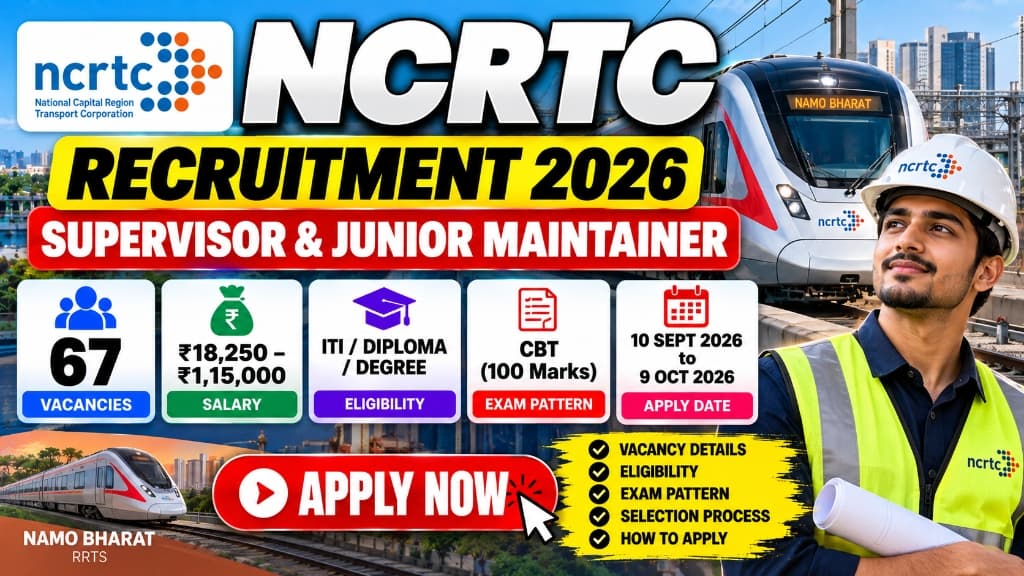
NCRTC Recruitment 2026: 67 Vacancies for Supervisor and Junior Maintainer Posts, Eligibility, Salary, Exam Pattern and How to Apply
The National Capital Region Transport Corporation (NCRTC) has released Vacancy Notice No. 32/2026 for the direct recruitment of Operations & Maintenance staff for the Namo Bharat/RRTS system.
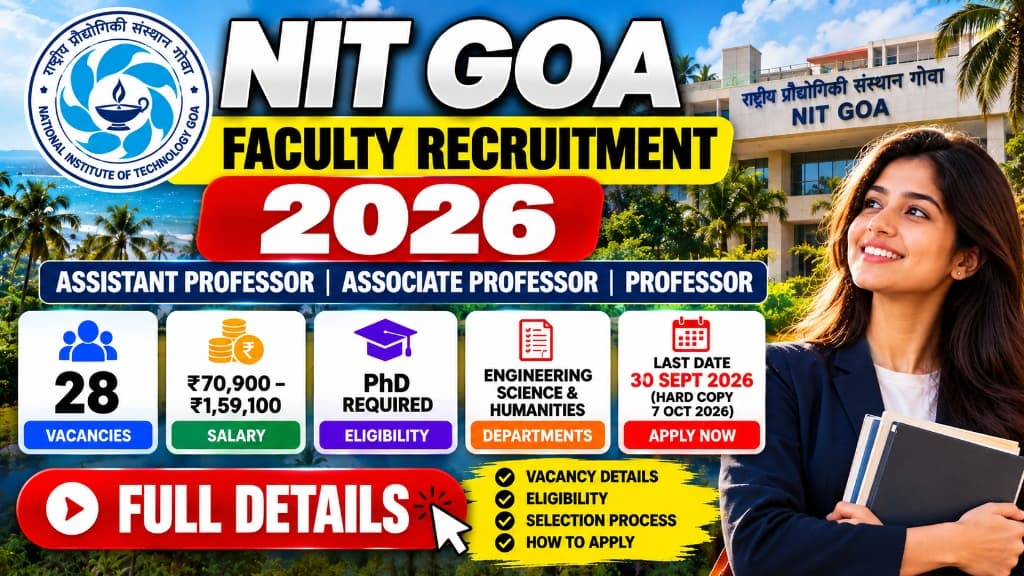
NIT Goa Faculty Recruitment 2026: 28 Posts, Eligibility, Salary, Vacancy, Selection Process and How to Apply
The National Institute of Technology Goa (NIT Goa) has released a notification for the recruitment of faculty members for various departments.
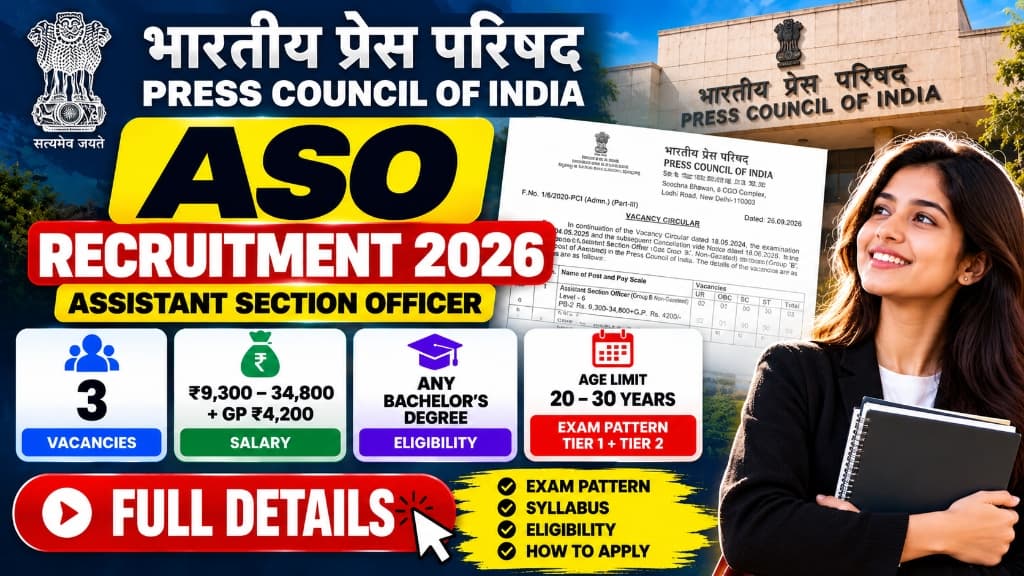
Press Council of India ASO Recruitment 2026: 3 Vacancies, Eligibility, Salary, Exam Pattern, Syllabus and How to Apply
The Press Council of India (PCI) has released a fresh Vacancy Circular 2026 for recruitment to the post of Assistant Section Officer (ASO).
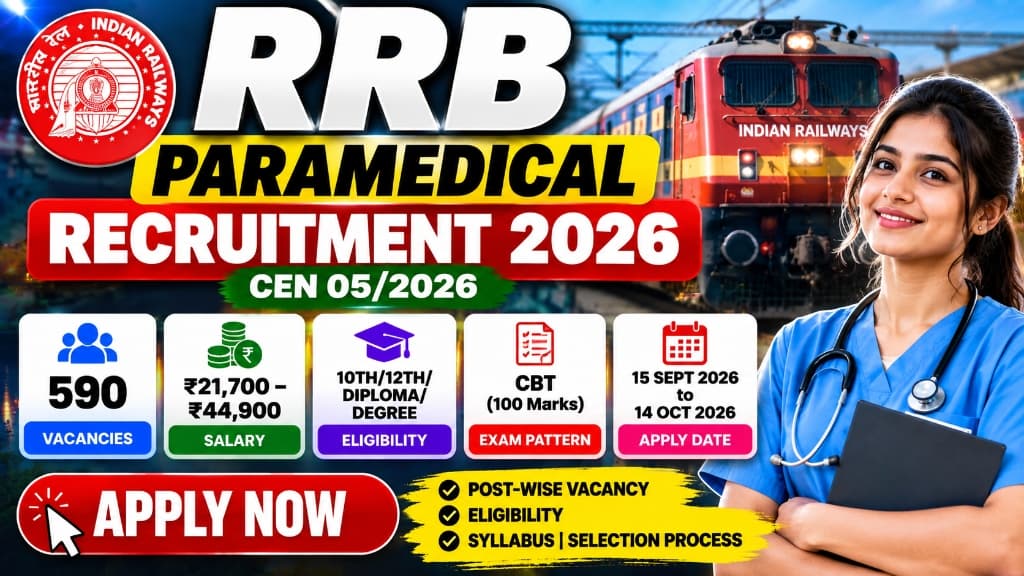
RRB Paramedical Recruitment 2026: 590 Vacancies, Eligibility, Salary, Exam Pattern, Selection Process and How to Apply
The Railway Recruitment Boards (RRBs) have released the RRB Paramedical Recruitment 2026 notification for 590 vacancies. Apply online till 14 October 2026.